
A Dickens Holiday 2027 · An evergreen costume resource
Thrift Your Way
to Victorian
A Dickens Holiday Costume Guide
A little imagination. A few secondhand treasures. A look that is wonderfully your own.
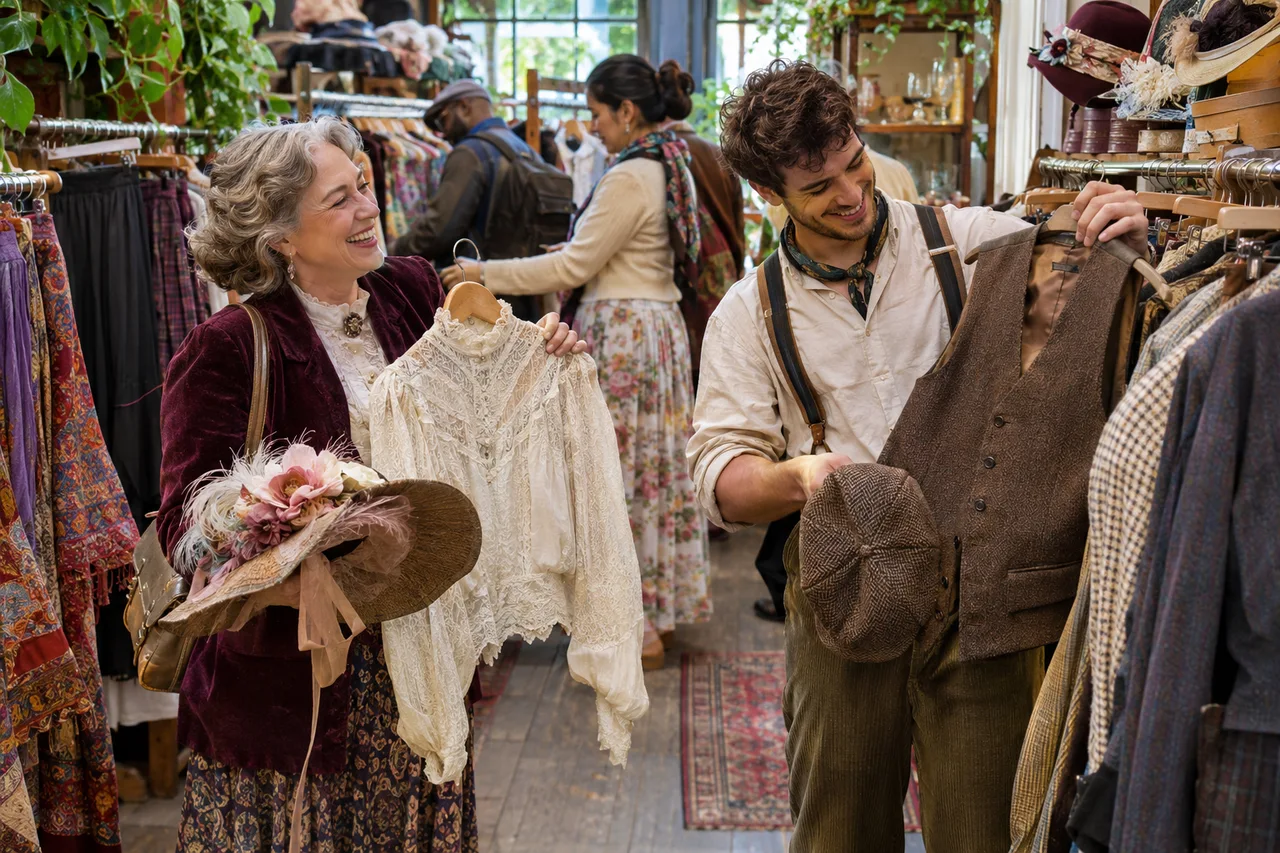
01 · Begin with what you have
The Thrift-Store Treasure Hunt
You do not need a costume shop or a big budget. Visit thrift stores, consignment shops and yard sales, then ask family about the skirts, scarves, hats and coats tucked away in their closets. Build around one useful piece and add simple details.
One era, many styles. The Victorian era spanned 1837–1901, during Queen Victoria’s reign. Fashions changed considerably over those years, from full skirts and bonnets to tailored jackets and elaborate hats. There is no single Victorian look—choose the period, style and everyday pieces that inspire you.
Start in the clothing aisles
- Long, full skirts in solids, stripes or plaid.
- White or cream blouses with high collars, lace or ruffles.
- Dress shirts, waistcoats, plain trousers and long coats.
- Shawls, scarves, cardigans and comfortable boots.
Then look beyond the racks
- Secondhand hats, artificial flowers and ribbon.
- Lace curtains or cotton pillowcases for small details.
- Aprons, gloves, brooches and cloth drawstring bags.
- Soft Christmas tree skirts and wraps for easy capes.
1837–1901 · One era, many styles
How Victorian Style Changed
Look at the shape of the skirt, the sleeves and where the fullness sits. These four examples show some of the biggest changes in fashionable women’s daywear. Trends overlapped, and clothing also depended on work, budget, place and occasion.
Modern costume illustrations inspired by period fashions, rather than original historical photographs.
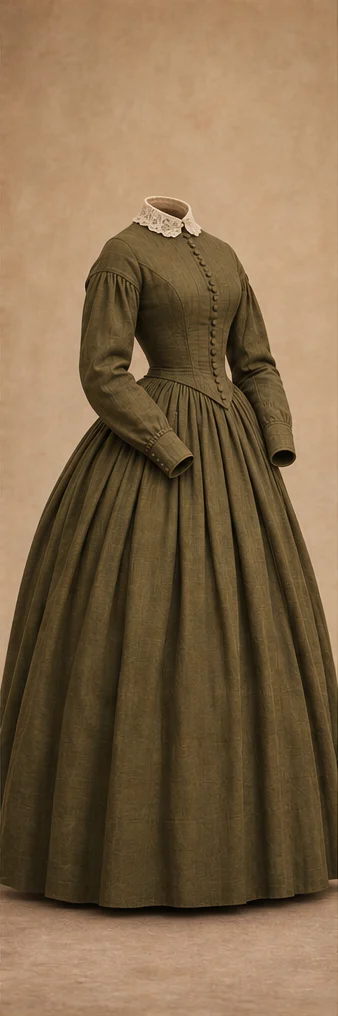
1837–1849
Bonnets & bell-shaped skirts
Shown: an 1840s-inspired look
Early Victorian fashions included pointed waists and full skirts supported by petticoats. By the 1840s, sleeves were generally more restrained than the large puffs of the 1830s.
Thrift the idea: Try a gathered maxi skirt, a fitted cardigan over a high-neck blouse, and a simple bonnet. A slip adds gentle fullness.
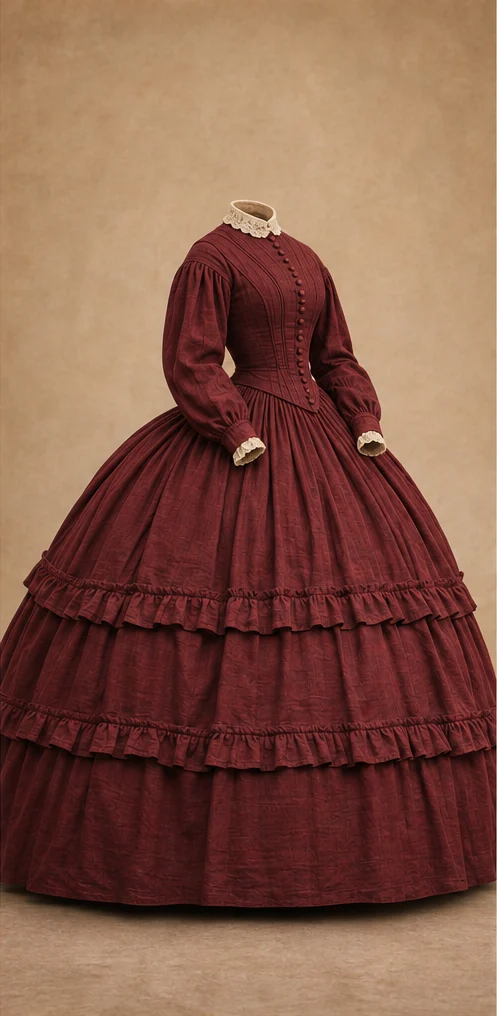
1850s–1860s
Skirts grow wider
Shown: a look inspired by about 1860
Skirts widened, with cage crinolines arriving in 1856. These lightweight hoop frames supported the fabric; later in the 1860s, fullness began moving toward the back.
Thrift the idea: Look for a generously gathered skirt and a neat blouse or short jacket. Suggest the shape with a petticoat—you do not need a hoop to join in.
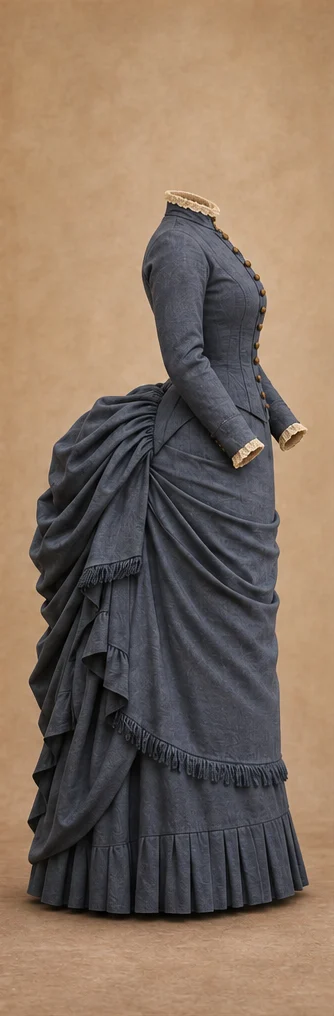
1870s–1880s
Fullness moves to the back
Shown: an 1880s-inspired bustle look
Draped overskirts and bustles emphasized the back of the dress. A bustle is a support beneath the rear of the skirt. Its size changed, with a pronounced revival in the 1880s.
Thrift the idea: Drape a lightweight overskirt or scarf toward the back of a long skirt and secure it to the waistband. Keep the front easy to walk in; elaborate supports are optional.
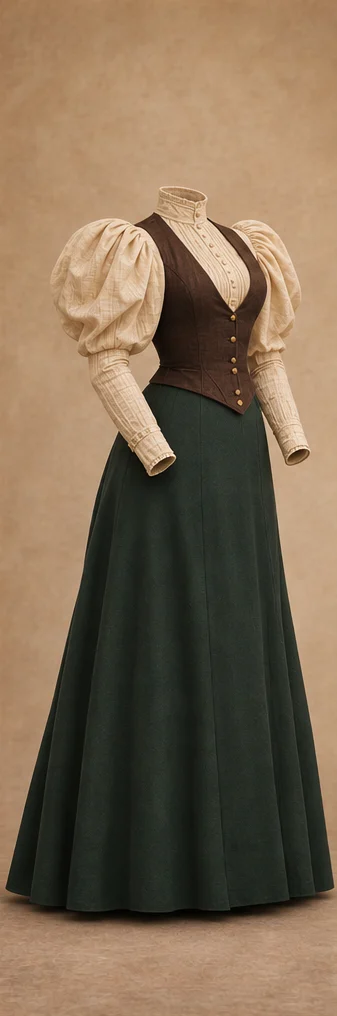
1890s–1901
Puffed sleeves & tailored lines
Shown: a mid-1890s-inspired look
In the 1890s, simpler flared skirts and high collars accompanied dramatic upper sleeves. The biggest sleeve shapes were a mid-decade fashion, not a look worn unchanged through 1901.
Thrift the idea: Search for a puff-sleeved blouse, a plain A-line skirt and a fitted vest or jacket. Add a small decorated hat and comfortable boots.
Explore the history: North Lincolnshire Museum’s Victorian Vogue, V&A’s guide to skirt shapes, and FIT’s 1840s fashion timeline.
02 · A skirt, a blouse, a little imagination
Victorian Looks for Women
Start with a long gathered skirt and a high-neck blouse, or a long dress. Lace, ruffles and a brooch add character. Choose cotton, wool-look fabric, velvet or satin from the secondhand rack; a shawl or cardigan makes the outfit your own.
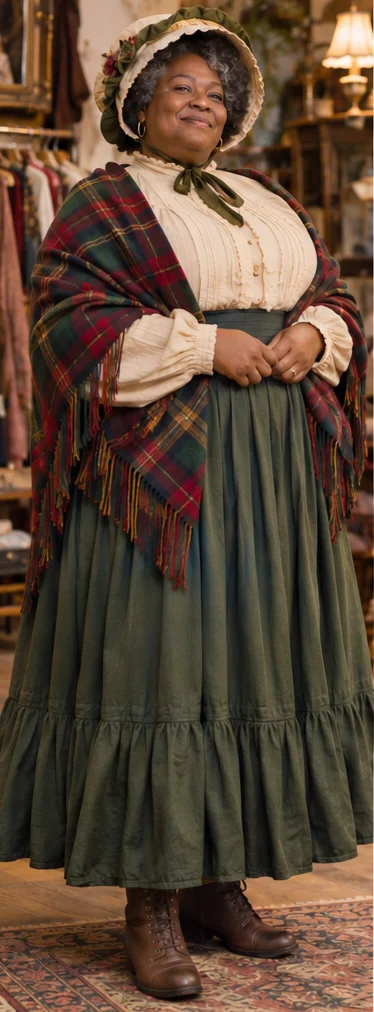
The townswoman
A gathered skirt + high-neck blouse + plaid shawl + bonnet + lace-up boots.
Check the skirt and scarf racks first. A brooch holds the shawl together; a slip underneath gives the skirt a little fullness.
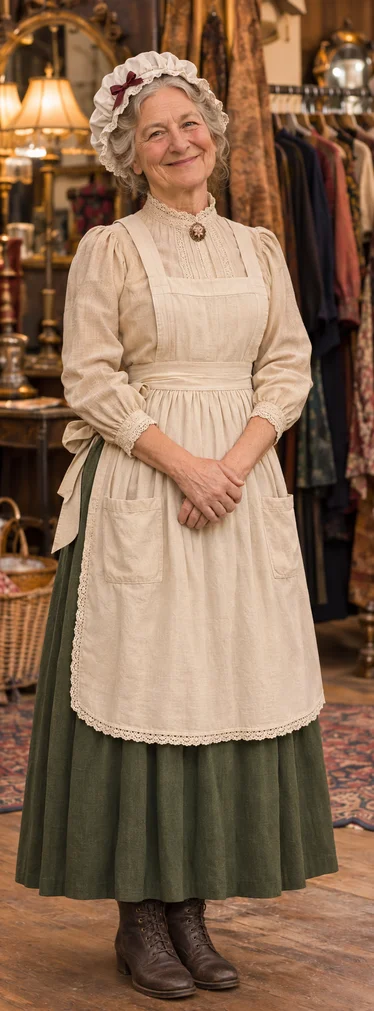
The cottage Christmas look
A long green skirt + cream blouse + lace-trimmed apron + ribboned mobcap + boots.
Start with a simple cotton apron and add a little lace. A burgundy ribbon bow on your homemade cap and a borrowed brooch give everyday pieces a festive finish.
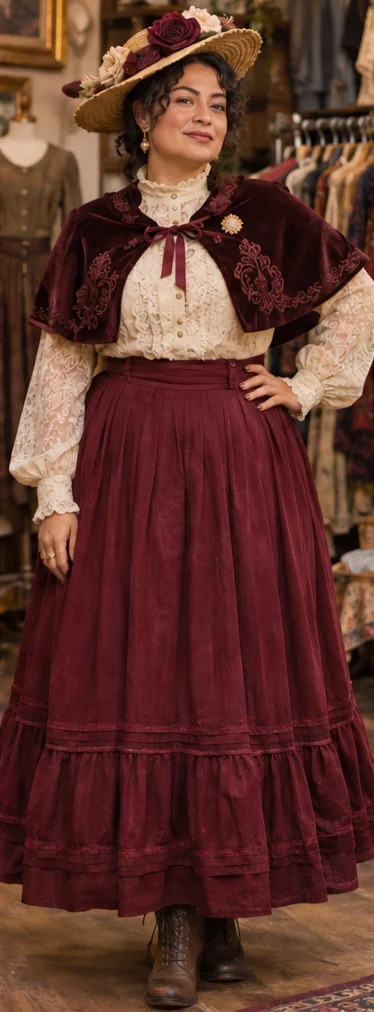
The festive lady
A long skirt + lace blouse + short cape + decorated secondhand hat + ankle boots.
Rich burgundy, evergreen or a simple plaid feels festive. Ribbon and artificial flowers can dress up a plain hat without buying a new one.
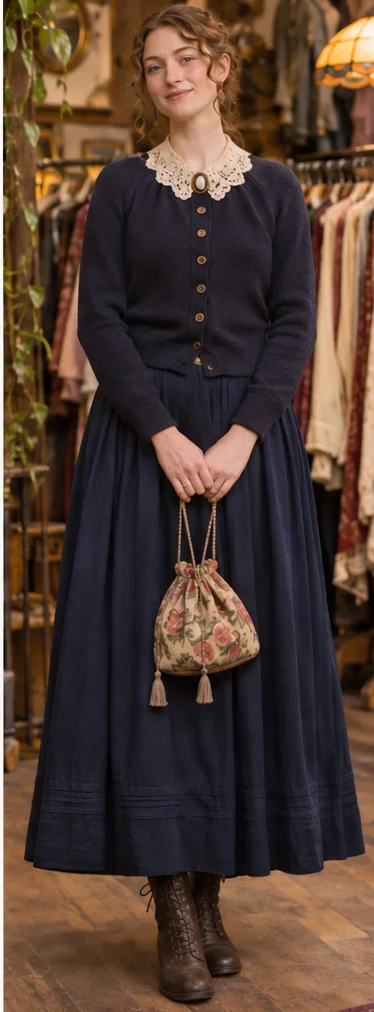
The shop assistant
A dark skirt + buttoned cardigan + lace collar + small cloth purse + comfortable boots.
Borrow a cardigan and add a removable lace collar. A small drawstring bag keeps essentials close and finishes the outfit.
03 · Everyday clothes, old-fashioned character
Victorian Looks for Men
A white or pin-striped dress shirt, plain black, gray or brown trousers, and a waistcoat make a useful starting point. Add a soft cap or secondhand hat, then a scarf and overcoat for warmth. You can borrow the idea of any of these looks and use what fits you.
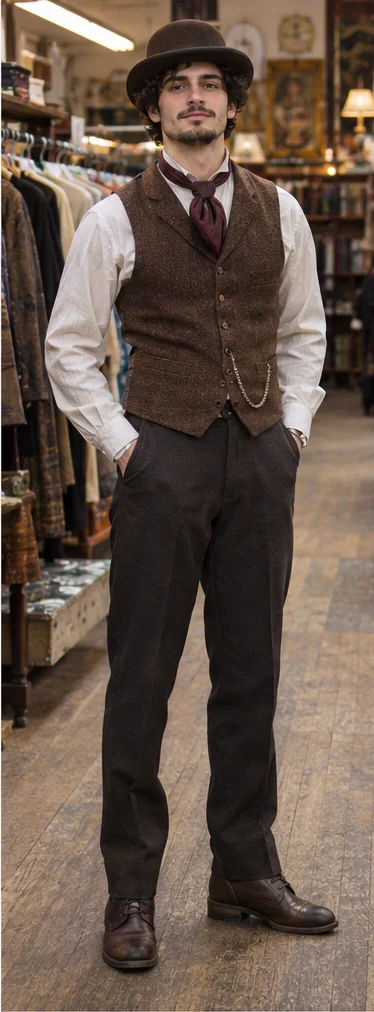
The shopkeeper
A waistcoat + white shirt + plain trousers + scarf cravat + bowler + dark shoes.
A waistcoat is simply a vest. Check the suit separates: it need not match your trousers. A spare chain can suggest a pocket watch.
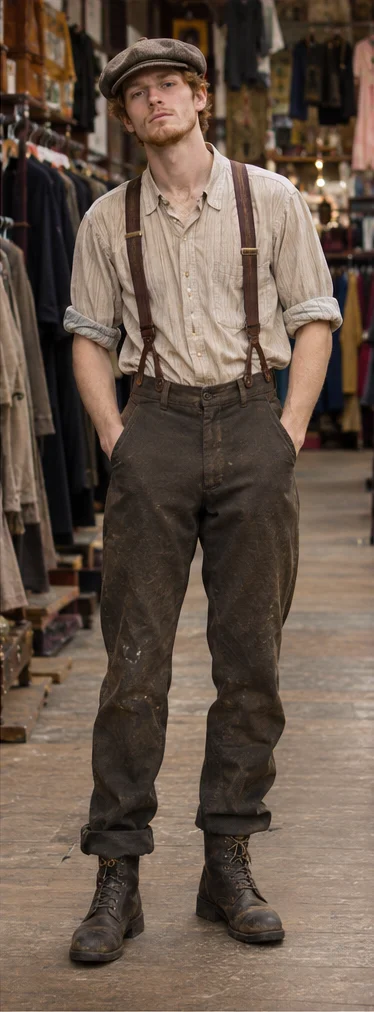
The tradesman
A striped shirt + suspenders + brown trousers + soft cap + lace-up boots.
Start with everyday trousers and a dress shirt. A newsboy-style cap and suspenders give the outfit its character; keep sleeves down when it is chilly.
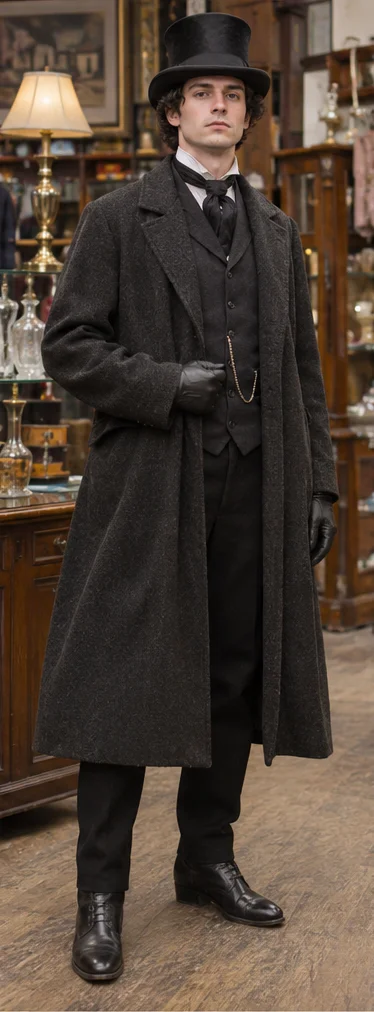
The gentleman
A long dark coat + waistcoat + dress shirt + cravat + trousers + gloves + dress shoes.
Look for an older overcoat or a former rental jacket in a resale shop. A top hat is optional; spend on a comfortable fit before an elaborate accessory.
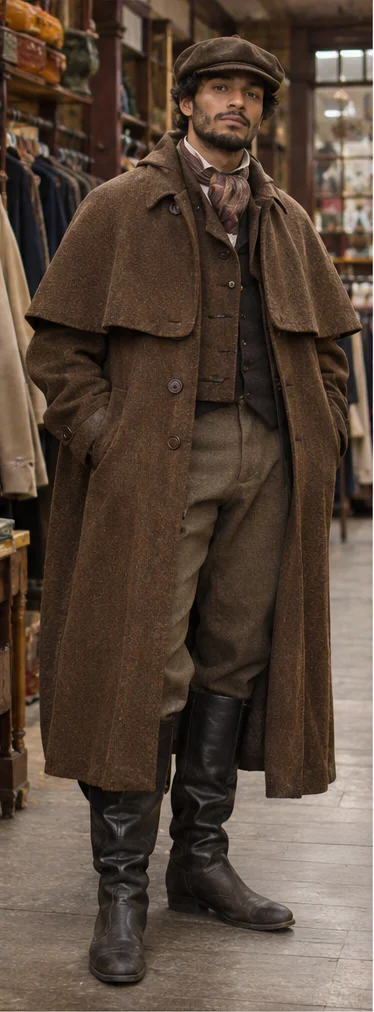
The traveler
A brown overcoat or wrap + soft scarf + cap + plain trousers + practical boots.
A warm coat already in your closet is a fine starting point. Layer a short wrap over the shoulders for a cape effect.
04 · One memorable detail
Make Your Own Victorian Hat or Mobcap
A secondhand hat can become the star of your outfit. For a simpler look, make a soft cotton mobcap using the original costume handout’s 18-inch-circle method.
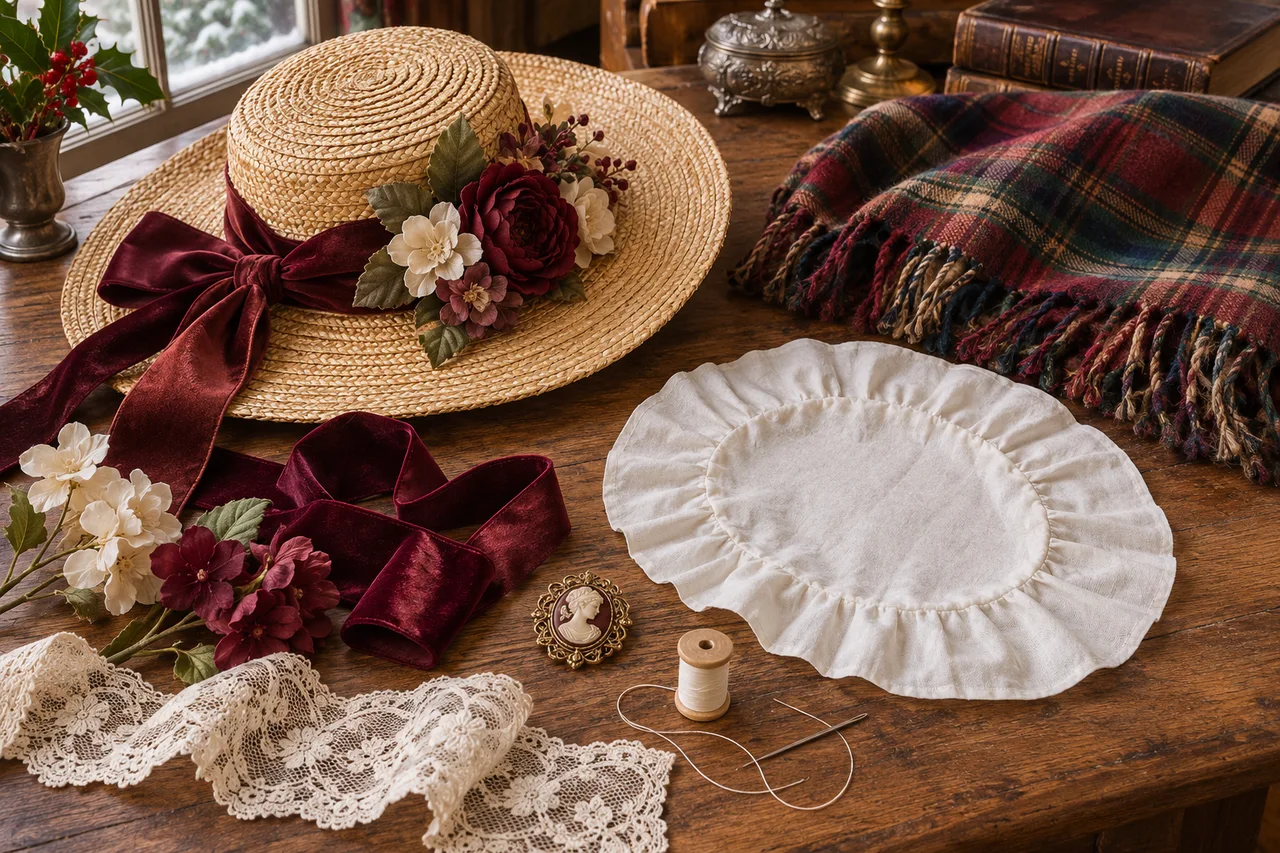
Decorate a secondhand hat
- Choose the base. Try a wide-brim dress or straw hat. Check that it fits securely before adding trim.
- Add ribbon. Wrap it around the crown and tie a bow. Use a few stitches or clips so the decoration can be removed.
- Build a small arrangement. Group artificial flowers on one side. Add a feather, a little netting or a strip of lace; keep your view clear.
- Try it on. Check for sharp wire ends and loose decorations. Secure everything before heading out.
Make a cotton mobcap
- Cut an 18-inch circle. Use soft cotton, such as an old pillowcase. Finish the edge with a narrow hem or lace.
- Mark the gathering line. Measure approximately 3 inches in from the edge all the way around.
- Thread and gather. Following the handout, use a large needle to run narrow ribbon or narrow cord elastic through the fabric along that circle, with both ends emerging on the same side. Alternatively, sew a narrow ribbon channel along the marked line and thread elastic through it.
- Fit gently. Set the cap on your head, pull the ribbon or elastic until comfortable, and tie securely. Tuck the bow underneath and use hairpins if needed. Adjust the fit rather than pulling it tight.
05 · The holiday-aisle surprise
Turn a Christmas Tree Skirt into a Cape
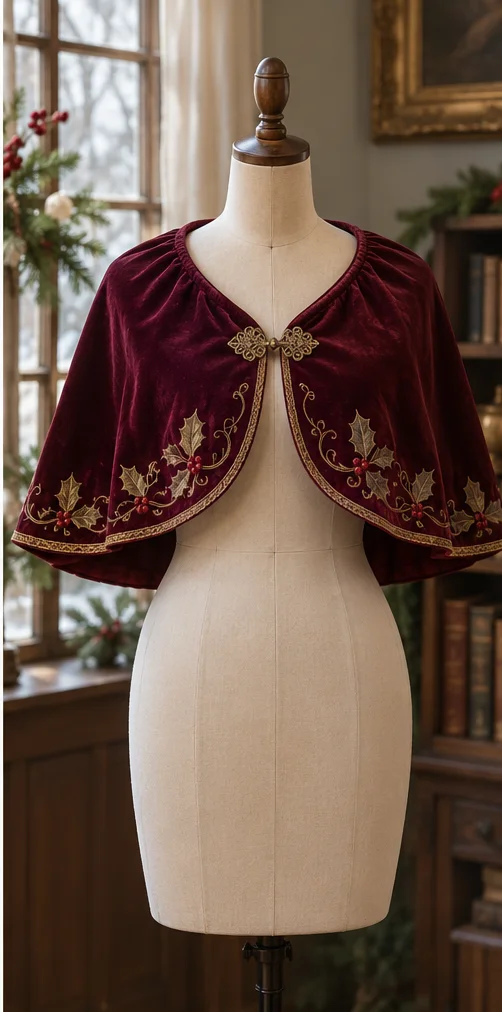
A soft burgundy tree skirt already has a circular shape, center opening and front slit. Velvet-look fabric or a simple plaid can become a festive shoulder cape with only a little adjusting.
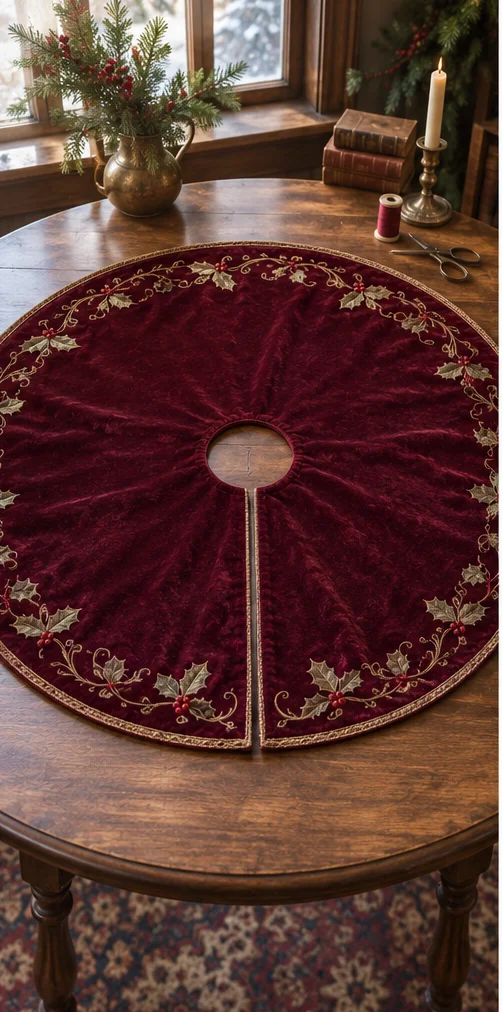
Step 1
Start with the skirt
Choose a clean, soft skirt without stiff backing, wire or loose glitter. Open the slit completely and find the center opening.
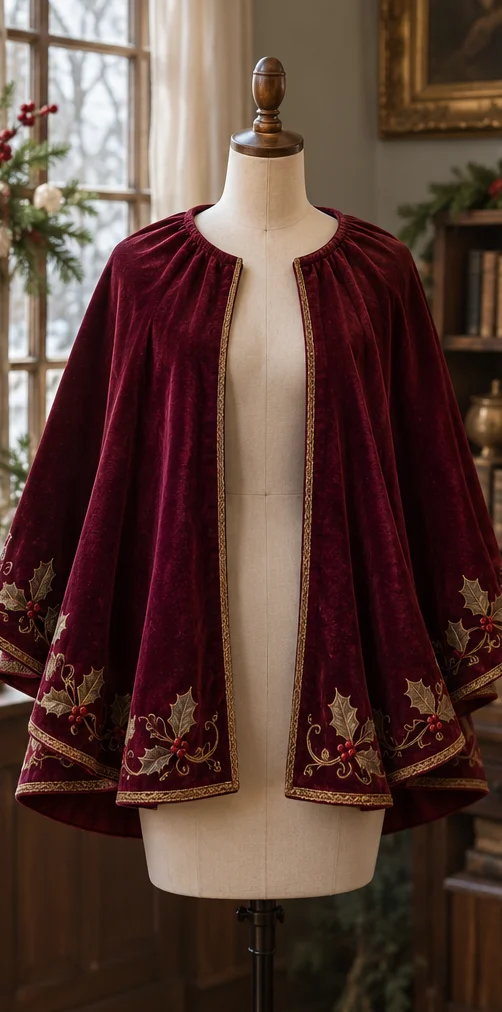
Step 2
Drape & adjust
Rest the opening loosely around your neckline, with the slit in front. Let the fabric fall over both shoulders. Fold the top edge outward to shorten it; if you cut it, finish the new edge with a hem or binding.
Step 3
Fasten comfortably
Use a sewn-on clasp, button and loop, or short ribbon ties at the upper chest, below the throat. Leave breathing room and check that your arms move freely.
06 · The gentleman’s finishing touches
Make a Gentleman’s Cravat or Cape
A cravat or ascot is a softly arranged neck scarf. A thrifted scarf or an ordinary necktie gives you the effect without a special purchase.
From a scarf
- Look for a lightweight scarf about 40 inches long and 6–8 inches wide, or fold a wider one lengthwise.
- Drape it around your collar, cross the ends and make a loose knot or a generous soft bow at the front.
- Spread the fabric attractively and tuck the ends into your waistcoat. Keep the fit loose and comfortable.
From a regular necktie
Begin tying it as usual, but on the last step lay the wide end over the front of the knot instead of pulling it through. Spread it out like an ascot and tuck it into your vest. A tie tack or covered clasp can hold the folds together; keep sharp points away from skin.
A simple wrap cape
- Choose a thrifted wool-look wrap, shawl or soft rectangle of fabric. Black, brown or another subdued solid works well.
- Fold the top edge over to form a broad collar and drape it evenly across your shoulders.
- Bring the front edges toward the upper chest. Add a button and loop, a clasp or short ties below the throat; hem any cut edges.
- Adjust the length so the wrap clears the ground and your hands stay free. Try walking and sitting before you finish the fastening.
A long secondhand overcoat is an equally useful option when you want warmth without making a cape.
Your next thrift-store trip
Find a beginning.
Make it your own.
Take a quick look in your closet, choose one outfit idea and write down just the pieces you still need. Borrow, reuse and add a small flourish. The joy is in joining in.
A Dickens Holiday is produced by Downtown Creative Works, Inc.
Prepared for 2027, with ideas to return to year after year.